Household Odors.
What absorbs, what masks, and why most "air fresheners" make things worse. Here's how we actually get rid of smells.
Quick answer: Most odor problems in a home aren’t solved by finding the source and cleaning it. The source matters — but odor molecules absorb into textiles, walls, and porous surfaces around the source, and they keep releasing into the air long after the original mess is gone. The real answer is two-part: clean the source when you can, and use something that actually absorbs the remaining odor molecules from the air rather than just covering them with perfume. Candles, plug-ins, and aerosol sprays are masking. You need elimination.
TECH has been making home cleaning products since 1975 and odor elimination products since not long after. Same family, same business, same standard: does this actually work, and is it safe around families? The odor-elimination line came from the same instinct as everything else TECH makes — customers asking for something that solves the real problem without the chemical smell that “masks” it.
This guide is what we’ve learned about household odors over fifty years — why “finding the source” advice only gets you halfway, why baking soda works on some things and not others, and what actually makes a smell leave a room. We’ll be honest about what works and what doesn’t, including household remedies and store-bought products. And we’ll talk about TECH where TECH is the right answer — which for odors is often, because this is one of the categories where the difference between masking and eliminating is the entire story.
Why most odor eliminators fail
Before we talk about specific smells, it’s worth understanding why so many odor-removal attempts leave you with the same smell three days later.
Masking instead of eliminating. This is the biggest category of failure. Aerosol air fresheners, plug-in fragrance devices, scented candles, spray deodorizers — almost all of them work by releasing their own strong scent that competes with the odor molecules already in the air. Your nose gets overwhelmed and temporarily adapts to the fragrance instead of the odor. The original smell is still there. You just can’t smell it past the perfume. When the fragrance fades or you leave the room and come back, the original odor is exactly as strong as before.
Source-only thinking. The conventional advice says “find the source and eliminate it, the smell will go away.” Sometimes that works — if you take out the trash, the trash smell leaves quickly. But for most lingering odors (smoke, pet, cooking, mildew), the odor molecules have absorbed into textiles, carpet, walls, upholstery, and anything else porous within several feet of the source. Cleaning the source doesn’t remove the molecules already trapped in those materials. Those materials keep releasing the odor for weeks.
Chemical perfume overload. Many products that claim to “neutralize” odors are actually just heavy fragrances combined with low-concentration neutralizers. The neutralizer does something, but the fragrance does more — and what you end up with is a room that smells like cheap perfume layered over a muted version of the original problem. This is how a house ends up with that “trying too hard to smell clean” vibe. Guests can smell both the fragrance and the original odor underneath.
A product that actually works on odors needs to do three things: absorb or neutralize the odor molecules themselves (not compete with them), work continuously to catch molecules released from textiles and porous surfaces over time, and do it without adding a heavy fragrance that becomes its own problem. That’s what TECH’s odor elimination gels were designed to do, and it’s the standard we’ve held for fifty years.
The four kinds of household odors
Every odor problem falls into one of these categories. Get the category right and you’ll pick the right approach on the first try.
Biological odors come from living or formerly-living organic sources. Pet accidents, kitchen food spoilage, body odor in fabrics, cooking proteins (fish, bacon, garlic), bathroom smells. These odors come from volatile organic compounds — actual chemical molecules released by bacteria, decay, or biological processes. They can be neutralized at the source AND absorbed from the air. Both matter.
Moisture-based odors are musty smells caused by mildew, mold, damp fabrics, water damage, or humid trapped air. Basements, bathrooms, closets with no ventilation, car interiors left wet. These odors come from the mold or mildew itself, so you can’t eliminate the smell without addressing the moisture. A dehumidifier plus ventilation plus cleaning the affected surface is the real fix. An odor eliminator helps with what remains, but it can’t replace drying the space out.
Particulate odors come from particles suspended in the air — smoke (tobacco, cooking, fire), cooking oils aerosolized by frying, fireplace ash, dust. These particles land on every surface in the room, not just near the source. Smoke from one cigarette absorbs into every textile, wall, and ceiling in the room. This is why smoke smell is so persistent — the particles are physically everywhere, not just in the air.
Lingering ambient odors are the everyday stale smells that accumulate from living in a space — cooking, pets, closed windows, old carpet, general “old house smell.” No single source, just time and life. These are the ones where continuous odor elimination (rather than periodic deep-cleaning) works best, because the sources are constant and small.
Most people treat every odor the same way — light a candle, spray something, hope. Matching the approach to the category is the shortcut past a lot of frustration.
The five rules we always follow
Whatever odor, whatever room, these rules hold.
1. Ventilate first. Before you reach for any product, open windows and move air. Fifteen minutes of cross-ventilation does more than any spray. For kitchens and bathrooms, run the exhaust fan during and for at least twenty minutes after whatever created the smell.
2. Address the source before you mask anything. If it’s trash, take it out. If it’s food in the fridge, throw it out. If it’s a pet accident, clean it properly with an enzymatic cleaner. Masking an active source is how you train yourself to live in an increasingly unpleasant space.
3. Remember what holds odors. Fabrics, carpets, upholstery, curtains, bedding, and any porous material in the room absorbs odor molecules and releases them back slowly. If the smell is strong enough to notice, those materials need cleaning too — not just the visible source.
4. Neutralize, don’t mask. If the product you’re using has a strong perfume scent, it’s probably a masker, not a neutralizer. Real odor eliminators work with minimal fragrance because they’re absorbing molecules rather than adding new ones. The best sign of an odor product working is that the room smells like nothing — not like a fragrance.
5. Continuous works better than periodic. For ongoing situations (pets, cooking, smoking households), a continuously-releasing odor absorber in the affected room works better than spraying something every few hours. The molecules get caught as they enter the air rather than after they’ve already settled into everything.
These rules work. But they work consistently only when the product you’re using is actually eliminating rather than masking — which is the line that most household odor products fail to cross.
Odor-by-odor
Here’s the short version of what we’d tell you for the most common household odor problems.
Pet odors (general) — Clean the source with an enzymatic cleaner (critical for urine, vomit, feces — only enzymes break down the proteins and uric acid that cause lingering smell). Wash any pet bedding. Vacuum and deodorize carpet. Then place a TECH Gel Odor Eliminator in the room for continuous absorption. The Pet Fresh scent is designed to integrate with pet-household odors rather than fight them.
Litter box smell — The box itself needs to be cleaned daily or every other day, regardless of what product you use in the room. Most “clumping litter that controls odor” doesn’t — it just contains the problem for a few hours. Place a TECH Gel Odor Eliminator near (not in) the box. The gel absorbs the airborne odor without affecting the cat’s ability to find and use the box.
Cooking smells — Fish, bacon, garlic, curry, burnt food. Run the exhaust fan during and after cooking. Open a window for cross-ventilation. Close bedroom and closet doors during cooking so textiles in those rooms don’t absorb the smell. For persistent lingering after these steps, a TECH gel in the kitchen area handles what ventilation missed.
Cigarette and cigar smoke — Smoke is a particulate problem, which means it’s absorbed into every surface in the room. Full smoke remediation is a deep clean: wash walls, ceilings, and hard surfaces; launder all fabrics (curtains, bedding, upholstery covers); shampoo carpet; air out hard furniture for days or weeks. This is a major project. A TECH Gel Odor Eliminator helps maintain progress between deep cleanings but can’t replace them. For severe smoke, professional restoration services have equipment (ozone, hydroxyl generators) that home methods can’t match.
Musty basements and closets — Moisture is the root. A dehumidifier is the real solution if the space is humid. For closets with no ventilation, leave the door cracked, add an absorbent like activated charcoal or a TECH gel, and don’t store damp items. For basements, address any water intrusion before anything else. Odor products in a wet space are fighting a losing battle.
Mildew in bathrooms — Run the exhaust fan during and twenty minutes after every shower. Clean any visible mildew on grout, caulk, or shower surfaces with a bathroom cleaner (vinegar works here — bathroom tile tolerates it). For persistent shower curtain mildew, wash the curtain in hot water with a mild bleach if the fabric allows. A TECH gel near (not in) the shower keeps the ambient humidity-related smells in check.
Refrigerator odors — Remove anything spoiled immediately (take it outside — not to the kitchen trash). For a mild smell, an open box of baking soda works. For a severe smell (rotten meat, spoiled milk), empty the fridge entirely, wash all shelves and drawers with hot soapy water, wipe the interior with a baking soda solution. Replace baking soda in the back every 30 days.
Trash can smell — The can itself holds residue in its bottom and sides. Remove the bag, wash the can with hot soapy water, let it dry completely. For recurring smell, sprinkle baking soda in the bottom of the can before the new bag goes in. For an outdoor can that smells even when empty, a stronger clean (diluted bleach, rinse thoroughly, full sun drying) handles most of it.
Garbage disposal — Run ice cubes and citrus peels through it for basic deodorizing. For a serious smell, pour a cup of baking soda down followed by a cup of white vinegar, wait ten minutes, flush with hot water. If the smell comes back quickly, the problem is usually gunk on the underside of the rubber splash guard — pull it out and wash it separately.
Washing machine mildew (especially front-loaders) — Clean the rubber gasket regularly with a cloth and mild detergent. Run a clean-cycle with white vinegar or a dedicated washer cleaner monthly. Leave the door ajar between uses so the drum dries. This one is maintenance — odor products can’t fix a washer that’s actively growing mildew.
Old house smell / general staleness — Ventilation, clean the soft materials in the rooms (curtains, upholstery, rugs), empty the vacuum cleaner, change HVAC filters. For ongoing maintenance, TECH gels in the main living spaces absorb the low-level odors that accumulate from daily life. This is exactly the use case continuous gel eliminators are designed for.
Car interior — Remove trash, vacuum thoroughly (including between seats and under mats), wipe down hard surfaces. For persistent smell, a TECH gel under a seat keeps the interior fresh for weeks without the overpowering synthetic smell of car-specific sprays. Alcohol-free matters here because closed-car heat intensifies any chemical scent.
Mystery smell you can’t locate — Check under furniture, in closets, behind the refrigerator, under sinks, in HVAC intakes. If you genuinely can’t find a source and the smell persists, consider mold (especially if the smell is musty or sweet), a dead animal (especially if localized and getting worse), or a plumbing issue (especially if the smell is sewage-like). Persistent mystery smells sometimes need professional inspection.
When to call a professional
Some odor situations need professional equipment we’d rather tell you about than sell you something that won’t handle.
Call a professional when: you’re dealing with fire or severe smoke damage, mold or mildew is visible and extensive (more than a small patch), there’s been water damage that sat untreated for more than 48 hours, a previous owner’s pet odor has soaked through to subfloor and padding, or the smell persists after thorough source-cleaning AND good odor absorption products.
Professional odor remediation uses equipment home products can’t replicate: hydroxyl generators that break down odor molecules in the air, ozone machines for severe contamination (these require leaving the space empty — not DIY), thermal fogging for smoke damage, and industrial-strength extraction for pet urine that’s saturated into carpet pad. For everyday odor maintenance, you don’t need any of that. For restoration-level situations, you do.
What about all the DIY home remedies?
Every cleaning blog recommends the same handful of home odor remedies. Some of them work for specific things. Some of them mostly don’t. Here’s the honest version.
Baking soda is genuinely useful. It’s an absorbent that chemically neutralizes acidic odors (pet urine, spoiled food). Works well in enclosed spaces (refrigerators, closets, sprinkled on carpet before vacuuming) where it can contact the odor molecules. Less effective as a general room deodorizer because it has limited surface area and can’t capture odors from across a room.
White vinegar is often recommended as a “natural deodorizer.” It’s mildly effective at neutralizing some odors (cooking, ammonia-based) because acetic acid reacts with certain odor molecules. But: vinegar has its own strong smell that many people find worse than the original odor while it’s working. And it’s corrosive to natural stone, grout, and some metals — so where you put it matters. Limited use case.
Coffee grounds absorb odors through surface contact, similar to baking soda but with less chemical neutralization. Fresh grounds in a bowl can handle mild fridge smells. Not strong enough for bigger odor problems.
Activated charcoal is legitimate. Real activated charcoal has enormous surface area and absorbs a wide range of volatile organic compounds. It’s genuinely effective in enclosed spaces (closets, refrigerators, small rooms). For larger spaces, the amount of charcoal you’d need becomes impractical.
Essential oils (diffused or sprayed) are masking agents, not eliminators. They compete with existing odors for your nose’s attention. Some have mild antibacterial properties, but they don’t remove odor molecules from the air — they just add their own.
Scented candles, plug-ins, aerosol sprays are almost all maskers. Read the label — if the product describes itself as “fragrance,” “freshener,” or “deodorizer” without the word “eliminator” or “absorber,” it’s a masker. These are useful for a dinner party when you need to override a smell for three hours. They’re not useful for actually removing odors.
Boiling lemon/cinnamon/vanilla (simmering a pot) is a masker. It works while you’re doing it because the strong scent overwhelms whatever else. Nothing is being eliminated. The moment the pot comes off the stove, the original smell comes back.
The core problem with DIY odor remedies is that most of them are either masking agents dressed up as solutions or absorbers that work only in tiny enclosed spaces. Open-room odor elimination requires something designed to release neutralizing agents continuously into the air — which is what TECH’s gel formulation does. TECH was built to fill exactly that gap: real odor elimination for real-sized rooms, without the fragrance overload that makes most air fresheners worse than the smell they’re fighting.
How TECH works
TECH Odor Eliminator Gels do something specifically different from sprays, candles, and plug-ins. Here’s the mechanism.
Continuous molecular absorption. The gel releases active odor-neutralizing compounds continuously into the surrounding air. Those compounds bind with odor molecules and neutralize them — breaking the molecular structures that your nose perceives as “smell.” This isn’t competing with the odor. It’s removing the odor from the air. The gel works 24 hours a day for up to 60 days without spraying, replacing, or reactivating.
High surface area, slow release. The gel formulation exposes a large surface area to the air while releasing the active compounds at a controlled pace. This is why the product lasts 60 days rather than evaporating in a week like liquid formulations, and why it handles rooms up to 250 square feet rather than just sitting uselessly in a closet. As the gel does its work, it shrinks visibly — you can see when it’s time to replace it without guessing.
Alcohol-free, pH-neutral, minimal fragrance. Most commercial odor products rely heavily on alcohol carriers, strong synthetic fragrances, or aerosol propellants that leave their own residue and smell. TECH’s formula is alcohol-free, pH-neutral, and uses enough fragrance to be pleasant without being overwhelming. The goal is a room that smells like nothing in particular — just clean — not a room that smells like a candle aisle.
The result is actual odor elimination, not fragrance layering. Rooms stay fresh without the “trying too hard” smell of heavily-scented products. Safe around people, pets, and kids (non-toxic pH-neutral formula). No sprays, no plugs, no batteries. One jar handles a room for up to two months. That’s what fifty years of formulation gets you.
Final thoughts
Household odors are solvable. Most people struggle with them because they’re treating the wrong thing — masking instead of eliminating, or cleaning only the visible source when the odor molecules have spread into every fabric and porous surface nearby. The right answer is usually two-part: address the source when you can, and use something that actually absorbs the remaining odor molecules from the air rather than perfuming over them.
Ventilate first. Clean the source. Remember what holds odors. Neutralize instead of masking. Let a continuous absorber do ongoing work.
That’s the system. It’s worked for fifty years. It’ll work in your home too.
What we reach for
Most odor products mask. TECH eliminates. The gel absorbs odor molecules continuously for up to 60 days — no sprays, no plug-ins, no perfume overload.
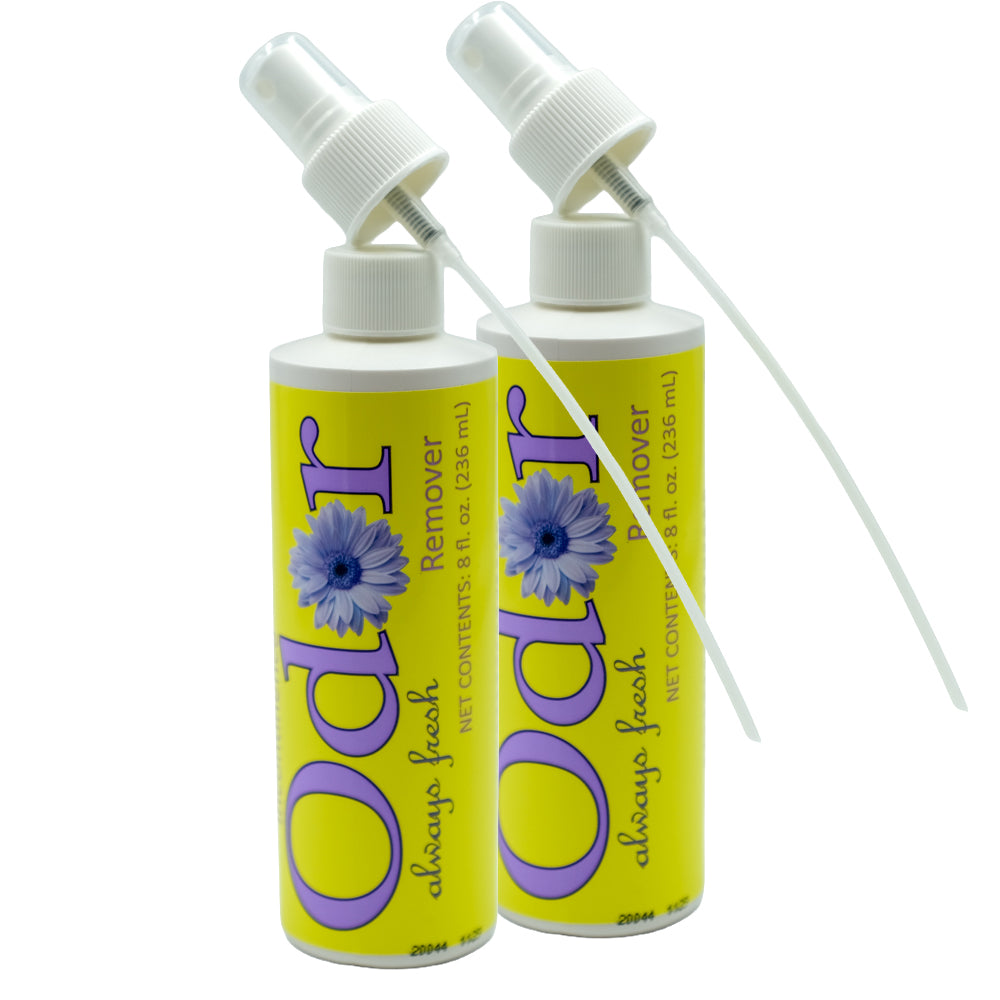
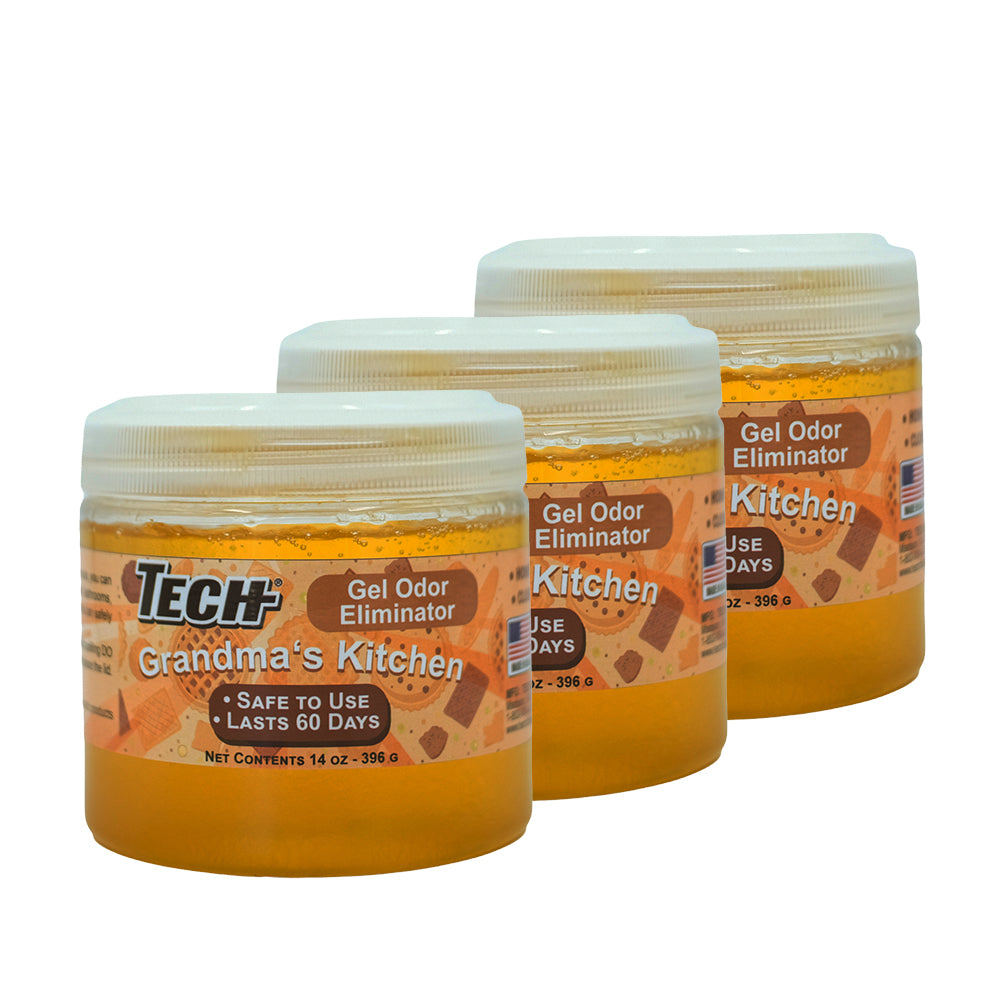
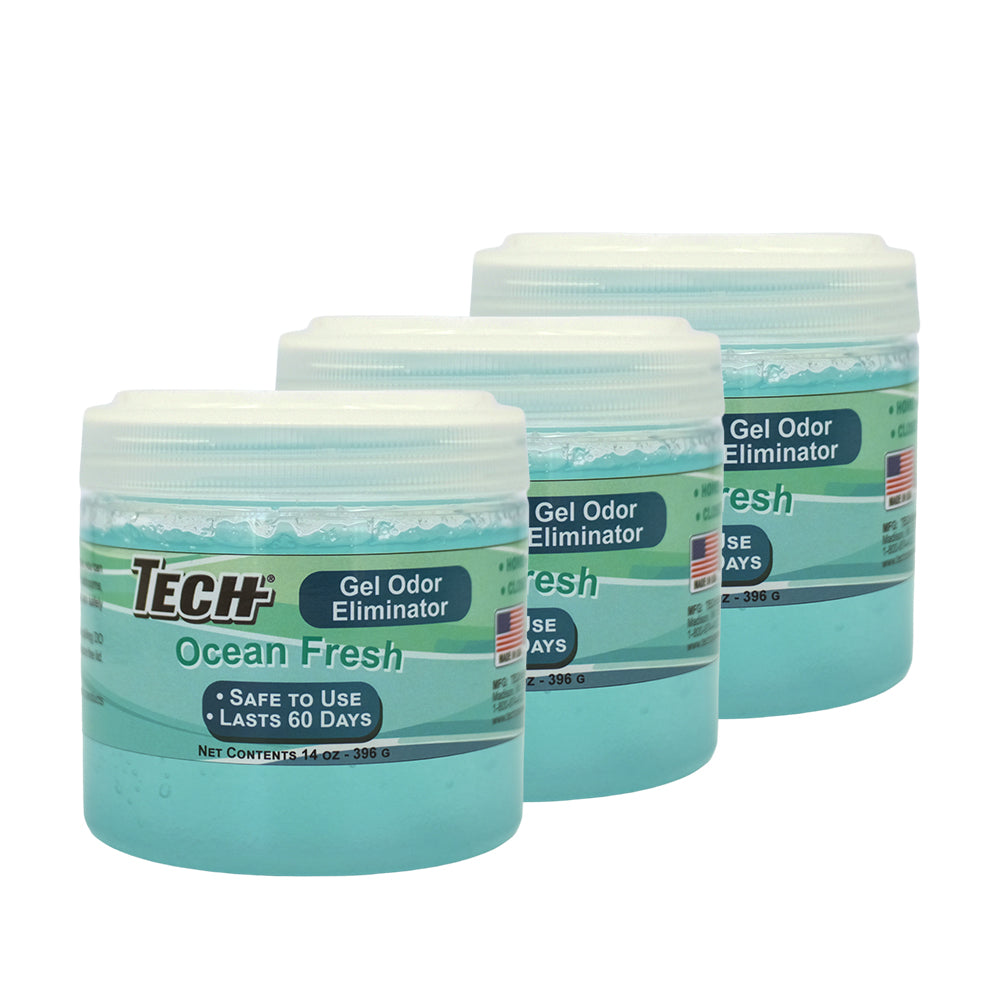
For more on why our approach works, read how TECH separates stains from surfaces.
Est. 1975
Three generations.
Made in USA
Every bottle, every batch.
Safer by design