Carpet Stain Removal.
Fifty years of getting stains out. This is how we think about it — and what actually works.
Quick answer: Most carpet stains come out — if you use the right method and the right cleaner. The stains that don’t come out are almost always the result of the wrong approach: scrubbing instead of blotting, hot water on a protein stain, or a cleaner that’s either too harsh for the fibers or too weak to break the stain’s bond. Get those two things right — method and cleaner — and the stain is usually gone.
TECH has been making carpet stain removers since 1975. Three generations of the same family, still in the same business, still answering the same question customers were asking at carpet stores fifty years ago: isn’t there something that actually works — without harsh chemicals and guesswork?
This guide is what we’ve learned in fifty years of answering that question. It’s written the way we’d explain it to a friend — not like a company trying to sell you something. But we’re also not going to pretend that the cleaner doesn’t matter, because it does. The method gets you halfway. The right cleaner gets you the rest of the way.
Why most carpet cleaners fail
Before we talk about stains, it’s worth understanding why so many carpet cleaning attempts don’t work — even when you do everything else right.
Too aggressive. Harsh chemical cleaners attack the stain, but they also attack the carpet. They strip dye, weaken fibers, and leave the carpet looking worse than the stain did. You’ve traded one problem for another.
Too weak. Mild household solutions — dish soap, club soda, vinegar — can handle the surface layer of simple stains. But they don’t break the chemical bond between the stain and the fiber. The stain looks gone when it’s wet, then reappears as it dries. That’s not cleaning. That’s rearranging.
Residue. This is the one nobody talks about. Many cleaners — including some purpose-made carpet cleaners — leave a sticky residue in the fibers after they dry. That residue attracts dirt. Within a few weeks, the “cleaned” spot is darker than the surrounding carpet. The stain didn’t come back. A new one formed on top of the residue.
A cleaner that actually works on carpet needs to do three things: penetrate the fiber without damaging it, break the stain’s bond with the surface, and rinse clean without leaving anything behind. That’s what TECH was designed to do, and it’s the standard we’ve held for fifty years.
The three kinds of carpet stains
Every stain falls into one of three categories. Get the category right and half the work is done. Get it wrong and you can make a stain permanent by using the wrong approach.
Water-soluble stains are the most common. Coffee, tea, soda, juice, washable ink, milk, mud, latex paint, most food. They dissolve in water, which means cold water plus the right cleaner will get most of these out if you catch them reasonably fast.
Oil-based stains are trickier. Grease, butter, cooking oil, lipstick, crayon, shoe polish, salad dressing, makeup. Water alone doesn’t touch them because oil and water don’t mix. These need a cleaner with surfactants that can break down the oil before you can rinse anything away.
Protein-based stains are the ones that will punish you if you rush. Blood, pet urine, vomit, egg, dairy, sweat. The mistake everyone makes is using hot water. Heat sets protein — literally cooks it into the fibers — and a stain that could have been lifted becomes permanent. Always cold water on proteins. Always.
A fourth category worth knowing: tannin-based stains (red wine, coffee left to dry, tea). These are aggressive pigment stains that bind fast and need to be treated like a timer is running.
Most people assume they need a different cleaner for each type. That’s how most cleaning products are marketed — one for grease, one for pet stains, one for wine. TECH takes a different approach. It’s formulated to work across all three stain categories safely, because the core chemistry — penetrating the fiber, breaking the stain bond, suspending the stain for removal — is the same regardless of stain type. The difference is method, not product.
The six rules we always follow
Whatever stain, whatever carpet, these rules hold.
1. Blot, don’t rub. Rubbing pushes the stain deeper into the fibers and damages the pile. The fiber texture never fully recovers. Always blot from the outside of the stain toward the center, lifting as you go.
2. Cold water first. On almost every stain, cold water is the right starting point. Hot water sets protein stains and can set some tannins. Room-temperature or cold. Always.
3. Test in a hidden spot. Before any cleaner — ours or otherwise — dab a small amount on a hidden area. Under a couch, inside a closet, behind a door. Wait five minutes. Check for color change. Carpet dyes vary widely and you’d rather discover a problem on a 1-inch patch than on your whole living room.
4. Work from outside in. Push the stain toward its own center, not outward. Otherwise you’re making the stain larger.
5. Use a white cloth. Colored towels can transfer dye onto your already-stressed carpet. White is the only safe option.
6. If nothing’s working, stop and think — don’t escalate. When a stain isn’t responding, the answer is rarely “more chemistry.” Pouring multiple products on top of each other won’t fix it — it’ll create a chemical mess in your carpet fibers that makes everything harder to resolve.
These rules work. But they work consistently only when the cleaner you’re using is doing its job — penetrating without damaging, breaking bonds without leaving residue, and rinsing clean. A good method with a bad cleaner still fails.
How to remove each type of stain
Here’s the short version of what we’d tell you for the most common carpet stains.
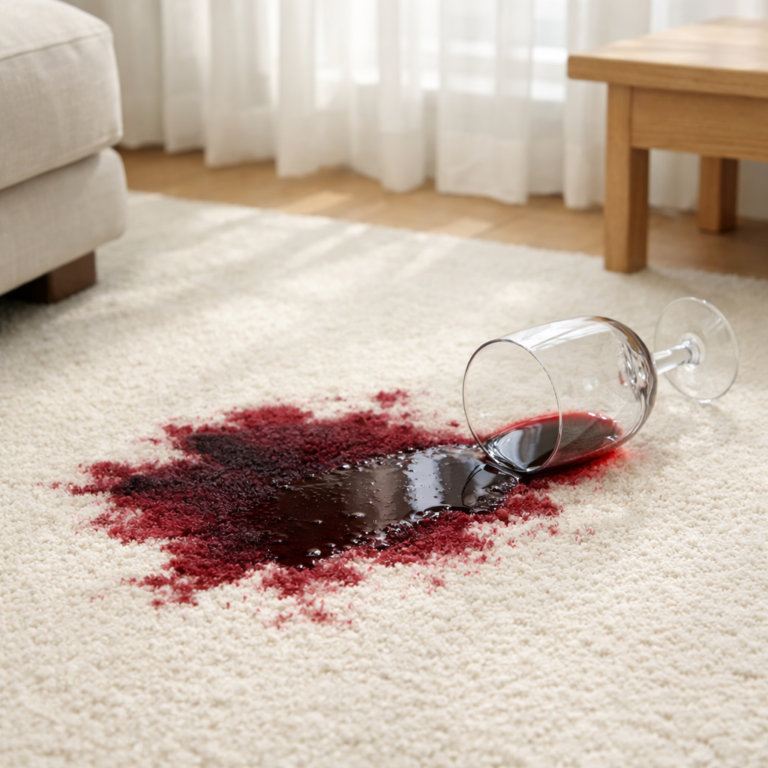
Red wine — Blot immediately, don’t rub. Cold water, working from outside in. The pigment in red wine binds to fibers quickly, so speed matters. Club soda can help dilute the stain while you work, but it won’t break the tannin bond on its own. A purpose-built stain remover like TECH finishes the job — breaking the pigment’s grip on the fiber without bleaching or damaging the carpet. Full article →
Coffee — Coffee is a tannin stain with a mild oil component from the bean. Cold water first to knock back the pigment, then a cleaner that handles both the tannin and the oil. DIY approaches (dish soap, vinegar) often leave a faint brown shadow because they address the surface but not the bond. Never use hot water — it sets the tannin permanently.
Pet urine — This is protein AND acid — one of the hardest combinations. Cold water to dilute, blot aggressively. Most household remedies (vinegar, baking soda) treat the smell superficially without breaking down the protein or the uric acid crystals. That’s why the smell returns on humid days. TECH penetrates past the surface to break the stain’s full chemistry — not just the part you can see.
Blood — Cold water, cold water, cold water. Never hot. Blot, rinse with cold water, blot again. If it’s fresh, cold water and a good stain remover handle it quickly. If it’s set, hydrogen peroxide at 3% can help on light carpets, but test first — it’s a mild bleach. TECH works on both fresh and set blood without the bleaching risk.
Mud/dirt — Counter-intuitive: let it dry completely before touching it. Dried dirt vacuums up cleanly; wet dirt grinds deeper into the fibers. After vacuuming, any remaining discoloration comes up easily with TECH and a damp cloth.
Vomit — Protein-based, so cold water only. Remove solids carefully, flush with cold water, blot. The challenge with vomit isn’t the visible stain — it’s the acids that soak into the carpet pad and create lingering odor. Surface-level cleaning with dish soap won’t reach it. You need a cleaner that penetrates the full depth of the fiber.
Ink (ballpoint) — Rubbing alcohol applied with a white cloth, dabbed carefully. Don’t use water first — it spreads the ink. For stubborn ink, TECH breaks the dye bond without spreading it further, which is the main risk with ink stains.
Chocolate — Scrape solids first with a dull edge. Cold water with a cleaner handles the remaining stain. Chocolate is a combination stain (oil + tannin + sugar), which is why single-purpose cleaners often leave a shadow.
Grease/oil — Blot excess, then cover with baking soda or cornstarch to absorb the surface oil. Vacuum after the powder has sat for an hour. The baking soda handles the top layer, but grease wicks into carpet fibers quickly. Follow with TECH to break down the oil that’s already bonded to the fiber.
Paint (latex, still wet) — Blot, then blot with cold water. Speed is everything. Once latex paint dries, it becomes a plastic film bonded to the fibers.
Paint (dried or oil-based) — This is where “call a pro” enters the conversation. DIY attempts on dried paint usually damage the carpet more than the original spill.
Nail polish — Non-acetone polish remover, applied to a white cloth (never directly to the carpet), dabbed carefully. Acetone can dissolve some synthetic carpet fibers. Go slow.
Gum — Ice it to harden, scrape off gently with a dull blade, then treat any residue with a cleaner that can dissolve the remaining adhesive without damaging fibers.
Mystery stains (moved in and it was already there) — Start with the gentlest approach and escalate. Cold water and blotting first, then TECH. Set stains of unknown origin respond better to a cleaner designed for multiple stain chemistries than to a product targeting a single type.
When to call a professional
We believe in solving problems at home — that’s what TECH was built for. But some situations need professional equipment and we’d rather tell you than sell you something that won’t work.
Call a professional when: the stain is more than 48 hours old and hasn’t budged after one honest attempt with a good cleaner, the spill is larger than about a square foot of saturated carpet, you’re dealing with dried paint or industrial solvents, it’s pet urine that has soaked through to the padding underneath (the smell persists even when the surface looks clean), the carpet is wool or silk, or it’s an heirloom or high-value rug.
A good carpet cleaning service has hot water extraction and truck-mounted vacuums that home cleaners can’t match. That’s fine. Knowing what your tools can and can’t do is part of doing the job right.
What about all the DIY home remedies?
Every cleaning blog on the internet recommends the same handful of home remedies: vinegar, baking soda, hydrogen peroxide, dish soap, club soda, salt. Some of them work sometimes. None of them work consistently. Here’s the honest version.
Vinegar is mildly acidic. It helps with some mineral-based stains and can partially neutralize pet urine odor. It doesn’t do much for oil, protein, or tannin stains — and on some carpets, the acid can affect dye.
Baking soda is an alkaline absorbent. It’s genuinely useful for absorbing fresh grease and masking odors. It doesn’t remove most stains on its own because it can’t break the bond between stain and fiber.
Hydrogen peroxide is a mild bleach. On light carpets with tannin stains, it can help. On dark or dyed carpets, it can strip color and make things much worse. Test first, always.
Dish soap has surfactants that cut grease — that’s real chemistry. Dish soap and cold water is a decent emergency first-pass. But dish soap isn’t designed for carpet fibers, so rinsing all the residue out matters — otherwise your carpet will feel stiff and attract dirt.
Club soda and salt are mostly wishful thinking with a few anecdotal wins on fresh spills.
The core problem with DIY remedies is inconsistency. They get you partway on simple stains and nowhere on hard ones. They don’t penetrate deep enough, they don’t break stain bonds reliably, and most of them leave residue that creates new problems. TECH was built to fill exactly that gap — the space between household remedies that sort of work and professional equipment you shouldn’t need for a spill on your living room carpet.
How TECH works
TECH isn’t a masking agent and it isn’t a bleach. Here’s what it actually does.
Penetrates the fiber. Carpet fibers are twisted and porous. A stain doesn’t just sit on top — it wicks into the fiber’s structure within seconds. TECH’s formula is designed to follow that same path, reaching the stain where it actually lives, not just where you can see it.
Breaks the bond. Every stain is a chemical bond between a foreign substance and a fiber surface. TECH’s surfactants and solvents break that bond — separating the stain from the fiber without dissolving or damaging the fiber itself. This is the step that DIY methods usually can’t accomplish.
Suspends the stain for removal. Once the bond is broken, TECH holds the stain material in suspension so you can blot it away cleanly. No re-depositing, no spreading, no residue left behind. The stain lifts out of the carpet instead of getting pushed around in it.
The result is a carpet that’s actually clean — not just wet and temporarily lighter. No sticky residue attracting new dirt. No chemical smell. No fiber damage. That’s what fifty years of formulation gets you.
Why this principle matters
A stain on a carpet is never the disaster it feels like in the first thirty seconds. The overwhelming majority of stains come out. The ones that don’t are almost always the result of the wrong method — scrubbing instead of blotting, hot water on a protein, layering product on top of product — or the wrong cleaner.
Slow down. Figure out what the stain is. Use the right method. Use a cleaner that can actually do the job without creating new problems.
That’s the system. It’s worked for fifty years. It’ll work on your carpet too.
What we reach for
The cleaner TECH started with in 1975 is still the one we reach for when a stain hits a carpet or upholstery.
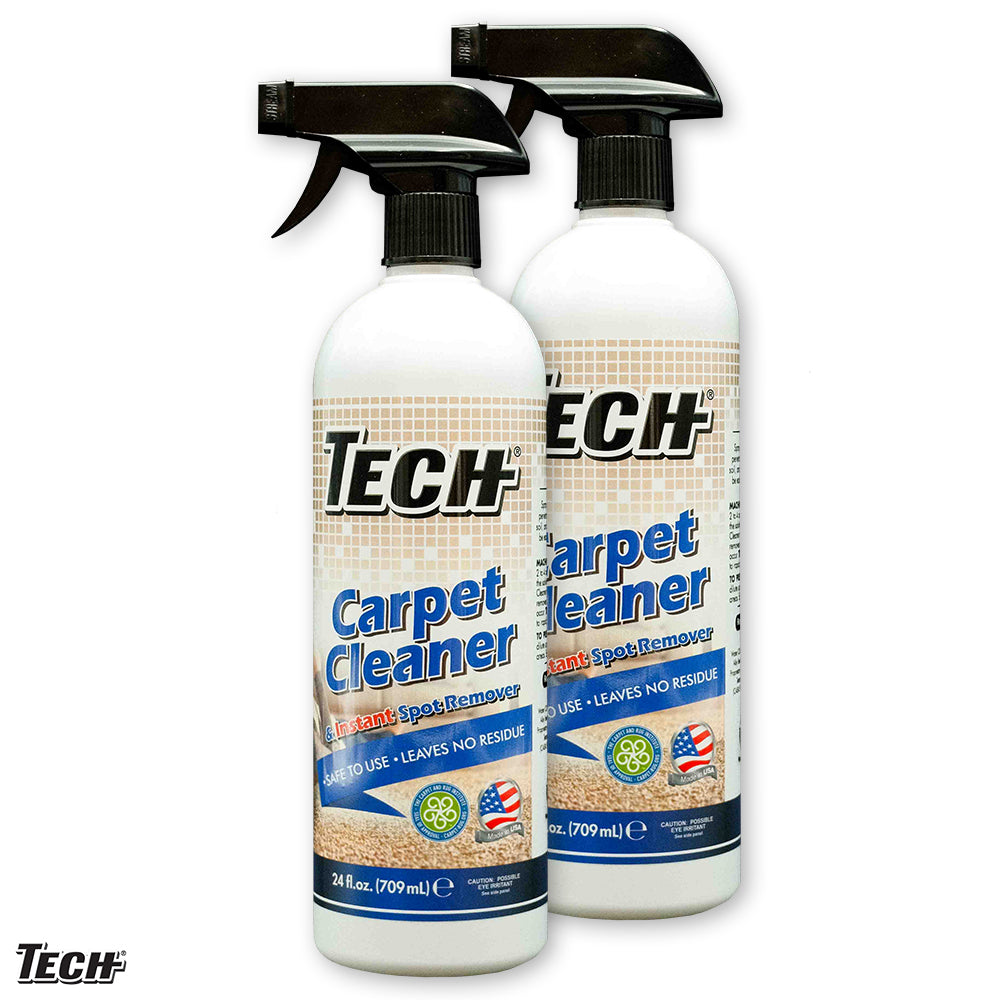
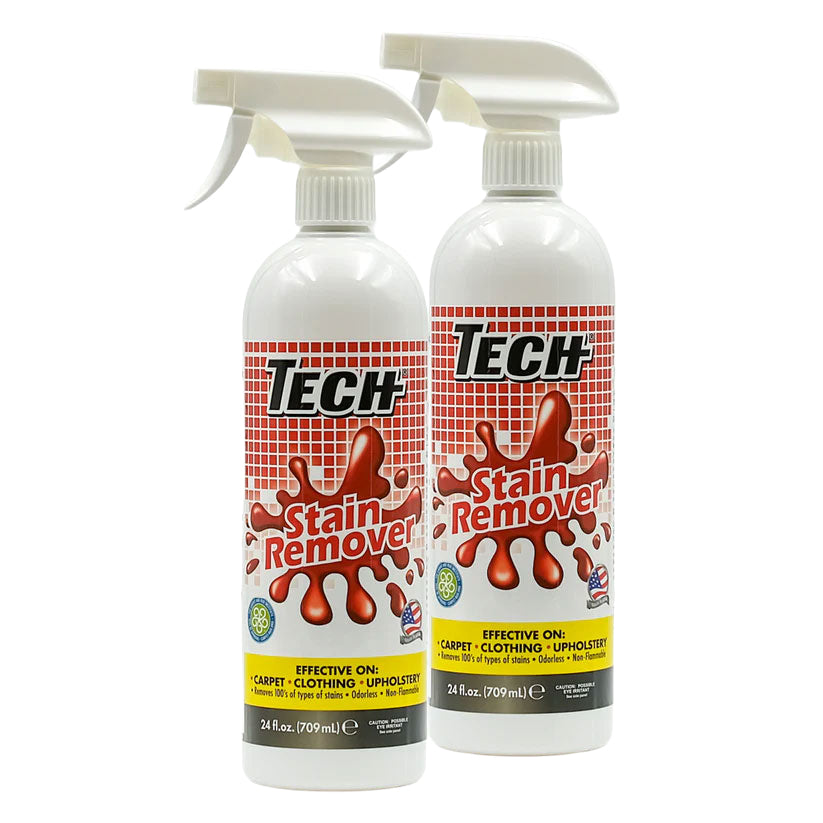
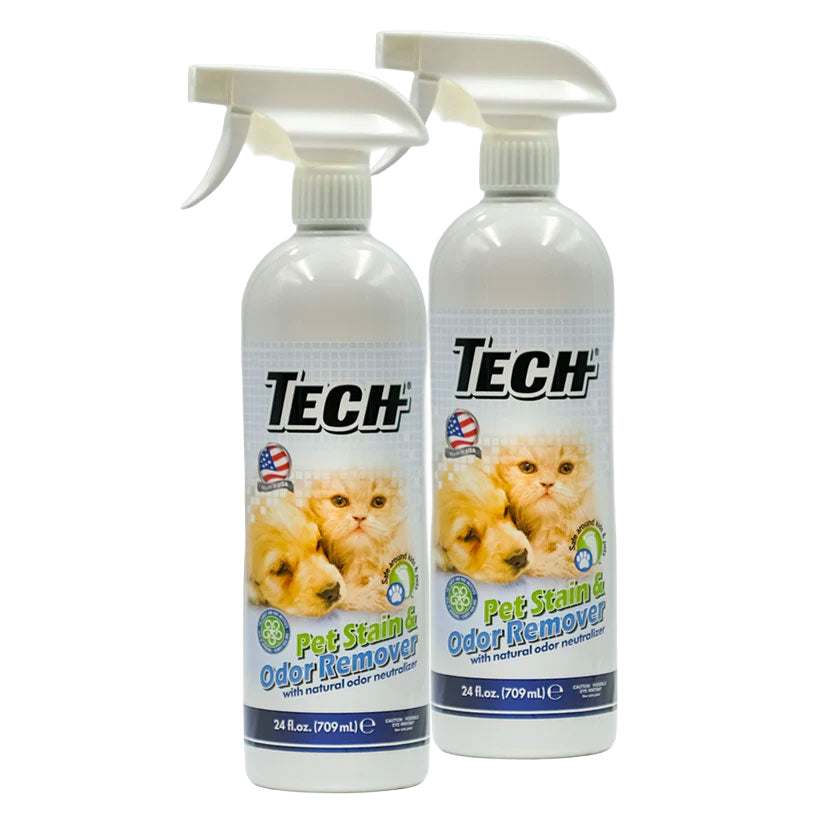
For more on why our approach works, read how TECH separates stains from surfaces.
Est. 1975
Three generations.
Made in USA
Every bottle, every batch.
Safer by design